
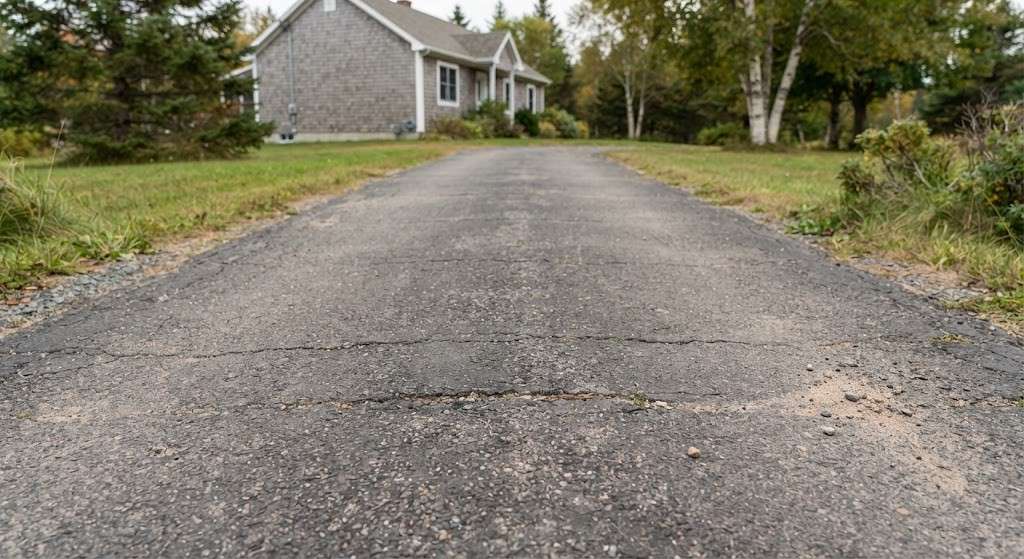
Quick answer: Asphalt cracks when water, cold and weight overwhelm the pavement or the base beneath it. In Nova Scotia, the main causes are freeze-thaw cycles and frost heave, a weak or poorly drained base, aging binder that turns brittle, and heavy loads. Small cracks can be sealed. Widespread “alligator” cracking usually means the base has failed and needs repair or replacement.
Every asphalt surface eventually cracks, but the type of crack, and how quickly it appears, tells you a lot about what is happening below. Some cracks are cosmetic signs of age. Others are early warnings of a failing base that will turn into potholes if ignored. This guide answers the question “why does asphalt crack?”, shows you how to read the most common crack types, and explains which fixes actually last in a Nova Scotia climate.
Common Types of Asphalt Cracks and What They Mean
| Crack type | What it looks like | Usual cause | Typical fix |
|---|---|---|---|
| Alligator (fatigue) cracking | Small, interconnected cracks like reptile skin, often in wheel paths | Repeated loads on a weak or wet base | Full-depth patch or base repair |
| Transverse cracking | Straight cracks running across the pavement | Cold-temperature shrinkage and aging binder | Crack sealing |
| Longitudinal cracking | Cracks running lengthwise, often at paving joints | Poorly bonded joints or base movement | Crack sealing; patch if widening |
| Block cracking | Cracks dividing the surface into rough rectangles | Binder hardening and shrinking with age | Sealing, then overlay or sealcoat |
| Edge cracking | Cracks and breakage along the outer edges | Weak edge support and soil movement beneath | Edge repair and better drainage |
| Reflective cracking | Cracks matching joints or cracks in the layer below | New asphalt placed over cracked pavement or concrete | Seal, or remove the old layer before repaving |
| Potholes | Bowl-shaped holes in the surface | Water entering cracks and weakening the base | Cut out and patch |

The Main Causes of Asphalt Cracking
Water and Freeze-Thaw Cycles
Water is asphalt’s biggest enemy. Once it seeps into a crack or through a porous surface, it softens the gravel base. When temperatures drop, that water freezes and expands, pushing the crack wider. Each thaw lets more water in. Over a Nova Scotia winter with repeated freeze-thaw cycles, a hairline crack can grow into a wide split in a single season.
Frost Heave
Frost heave happens when water in fine, poorly drained soil freezes into ice layers that lift the ground upward. The pavement on top bends and cracks as the ground rises unevenly, then settles back in spring. Driveways built on silty or clay soils without enough free-draining gravel are especially vulnerable.
A Weak or Poorly Drained Base
Most serious asphalt cracking starts below the surface. A base that is too thin, poorly compacted or built on soft subgrade cannot spread loads properly, so the asphalt flexes more than it was designed to. If water cannot drain away from the base, it stays saturated and weak. Alligator cracking is the classic sign of this kind of failure.
Aging and Oxidation
Sun, air and time slowly harden the bitumen binder that holds asphalt together. As the binder oxidizes, it loses flexibility and shrinks, which leads to block cracking and transverse cracks. Faded, grey asphalt with loose stones on the surface, known as raveling, is a sign the binder is wearing out.
Heavy Loads and Traffic
Asphalt designed for passenger cars will crack under repeated delivery trucks, RVs, garbage trucks or construction equipment. Parking heavy vehicles in the same spot, especially near edges, concentrates stress and speeds up fatigue cracking.
Installation Problems
Asphalt that was placed too thin, compacted poorly or laid in cold conditions will crack sooner. Weak joints between paving passes often show up as longitudinal cracks. Paving directly over old, cracked pavement without repairing it usually leads to reflective cracking within a few years.
Edges and Tree Roots
Unsupported edges crumble when tires roll over them, because there is nothing beside the asphalt holding it in place. Tree roots growing under a driveway can also lift and split the surface from below.
Why Asphalt Cracks Faster in Nova Scotia
Nova Scotia’s climate is hard on pavement. Winters bring frequent swings above and below freezing, heavy rain and wet snow, and long periods when the ground stays saturated. Spring thaw is especially damaging. As frozen ground thaws from the top down, meltwater gets trapped above the still-frozen layer, leaving the base soft and weak. That’s why many Canadian road authorities restrict heavy loads on roads during the spring thaw period.
Road salt does not chemically break down asphalt, but meltwater from salted snow keeps the surface wet and adds more freeze-thaw cycles. As a heavy civil contractor in Halifax that also handles excavation and drainage, G&R Kelly sees the same pattern on driveways, parking lots and street cuts across HRM: where water is controlled, pavement lasts; where it isn’t, cracking follows.
How Cracks Turn Into Potholes
A pothole is usually the final stage of an untreated crack. Water enters the crack and softens the base. Traffic pushes down on the weakened area and pumps fine material out. Freeze-thaw cycles break the surrounding asphalt into pieces. Eventually, tires dislodge those pieces and leave a hole. Sealing cracks early breaks this cycle before the base is damaged.
How to Fix Cracked Asphalt

The right repair depends on the type of crack and the condition of the base:
- Crack sealing: Narrow, isolated cracks are cleaned and filled with a flexible, rubberized sealant that keeps water out while letting the pavement move.
- Patching: Damaged areas, including potholes and small zones of alligator cracking, are saw cut, removed and replaced with fresh hot mix asphalt. Full-depth patches also repair the base underneath.
- Overlay or resurfacing: When cracking is widespread but the base is still sound, a new layer of asphalt can be placed over the repaired surface to restore it for years.
- Full replacement: When the base has failed, with widespread alligator cracking, potholes and standing water, the only lasting fix is removing the old pavement, rebuilding the base and repaving.
Our asphalt resurfacing and patching services cover each of these repairs, from crack sealing to full-depth reconstruction, for driveways, parking lots and streets in HRM.
Repair or Replace? How to Decide
Repair makes sense when cracks are isolated, the surface is mostly flat and water drains properly. Replacement is the better investment when cracking covers much of the surface, the pavement has sunk or rutted, potholes keep returning after patching, or water pools in the same low spots after every rain. Those signs point to a base problem that surface repairs cannot fix.
A contractor should look at the whole system, not just the cracks. Checking drainage, base condition and asphalt thickness tells you whether a patch will last or whether you’re paying to fix the same problem twice.
How to Prevent Asphalt Cracks
You can’t stop asphalt from aging, but you can slow cracking significantly:
- Build on a properly compacted, free-draining gravel base with enough depth for the loads it will carry.
- Grade the surface so water runs off and away, never toward the middle or the edges.
- Seal cracks each spring or fall before water can get in.
- Sealcoat every two to four years once new asphalt has fully cured.
- Support the edges and keep heavy vehicles off them.
- Clear snow promptly and keep meltwater draining off the surface.
Thickness matters as much as maintenance. Learn how thick an asphalt driveway or concrete slab should be to handle Nova Scotia winters and the loads you expect.
Frequently Asked Questions
Is it normal for new asphalt to crack?
No. New asphalt should not crack in its first year or two. Early cracking usually points to a weak base, poor drainage, thin asphalt or poor compaction.
Can you pave over cracked asphalt?
You can, but cracks in the old surface often reflect through the new layer within a few years. Repairing failed areas and sealing cracks first, or removing the old asphalt, gives a longer-lasting result.
What is alligator cracking?
Alligator cracking, also called fatigue cracking, is a pattern of small interconnected cracks that looks like reptile skin. It is caused by repeated loads on a weak or saturated base and usually needs a full-depth repair.
When is the best time to seal asphalt cracks?
Late spring through early fall, on a dry day, is ideal. Sealing in the fall keeps water out of cracks before the freeze-thaw season begins.
Does road salt cause asphalt to crack?
Salt does not chemically damage asphalt. However, meltwater from salt keeps the surface wet and can increase freeze-thaw damage in existing cracks.
How long does an asphalt driveway last before cracking becomes a problem?
A well-built, well-maintained asphalt driveway typically lasts 15 to 25 years. Minor cracking appears with age, but regular sealing keeps it from turning into structural damage.
Get Your Cracked Pavement Assessed
Cracks are easiest and cheapest to fix early. G&R Kelly has worked on paving, excavation and drainage projects across Nova Scotia since 1969, and we look at what’s happening beneath the surface before recommending a repair. Learn more about our team, or call (902) 835 3125 to book an assessment of your driveway or parking lot.