
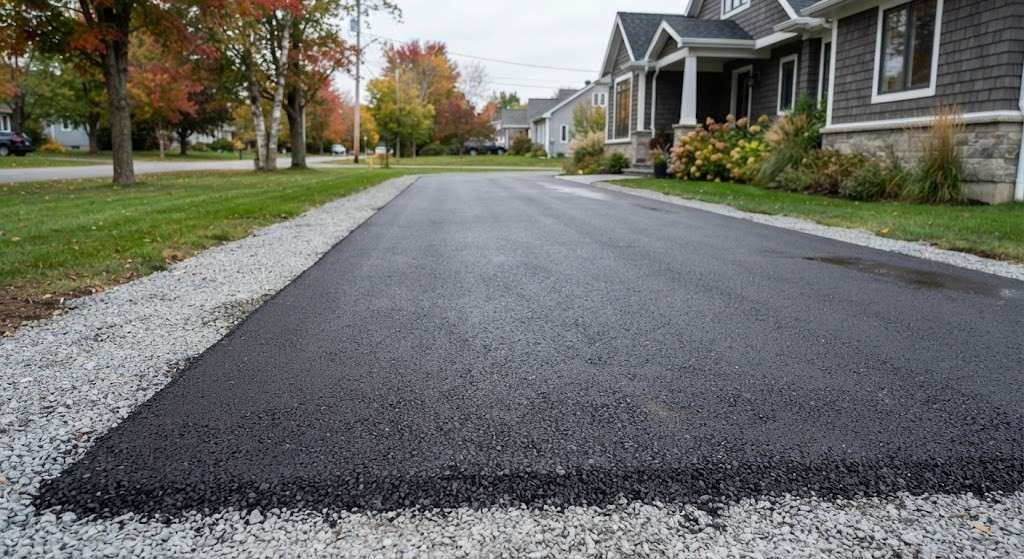
Quick answer: New asphalt hardens as it cools. You can usually walk on it after about 24 hours and drive a car on it after 48 to 72 hours, longer in hot weather. Asphalt keeps curing for 6 to 12 months as the binder hardens, so avoid heavy vehicles and sharp turns early on and wait until it has fully cured before sealcoating.
Fresh asphalt looks finished the moment the roller drives away, but it stays soft for weeks and keeps hardening for months. If you’re wondering “how long does asphalt take to cure?”, the answer helps you avoid tire scuffs, ruts and edge damage that can shorten the life of a new driveway or parking lot. Here’s what to expect, day by day, and how Nova Scotia weather changes the timeline.
New Asphalt Curing Timeline at a Glance
| Time after paving | What’s happening | What you can do |
|---|---|---|
| 0–24 hours | Asphalt is cooling and still soft | Stay off completely; keep pets and kids off |
| 24–48 hours | Surface has cooled and firmed up | Walk on it; no vehicles yet in warm weather |
| 48–72 hours | Firm enough for light traffic | Drive and park cars; avoid sharp turns |
| First 30 days | Still soft, especially on hot days | Vary where you park; keep heavy trucks, RVs and trailers off |
| 6–12 months | Binder fully hardened | Fully cured; time to consider sealcoating |
Does Asphalt Cure or Just Harden?

Asphalt and concrete harden in completely different ways. Concrete cures through hydration, a chemical reaction with water. Asphalt is a mix of crushed stone and sand held together by bitumen, a petroleum-based binder. Hot mix asphalt is placed at high temperatures, up to about 165°C, and compacted with rollers before it cools.
The first stage is simple cooling. As the mat cools, the binder stiffens and the pavement becomes firm enough to use. The second stage is slower. Over the following months, lighter oils in the binder evaporate and the asphalt oxidizes, which makes it harder and more resistant to marks. That longer process is what people mean when they talk about asphalt fully curing.
How Long Before You Can Drive on New Asphalt?
For most residential driveways, 48 to 72 hours is the safe window before you drive and park on new asphalt. In cool spring or fall weather, the surface firms up faster. On hot summer days, when pavement temperatures climb well above the air temperature, wait the full 72 hours or longer.
Commercial lots follow the same principle, scaled up. On larger driveway and parking lot paving projects, lots are often paved in sections so traffic can move onto cooled areas while newer sections firm up. That planning matters for stores, offices and apartment buildings that can’t close their lots for days at a time.
Do Overlays and Patches Cure the Same Way?
Yes. Asphalt overlays, resurfacing and patches harden the same way as new paving, by cooling first and then slowly oxidizing. Because a thin overlay or a small patch holds less heat than a full-depth driveway, it usually firms up and can take traffic sooner.
That’s why utility cuts and potholes on busy streets can be reopened soon after the patch is compacted and cooled. The same protection rules still apply in the first weeks: avoid sharp turns, heavy point loads and parking on fresh edges until the new asphalt has hardened.
What Affects Asphalt Curing Time?
- Temperature and sun: Heat keeps the binder soft. Full sun and summer heat slow early hardening, while cool, overcast days speed it up.
- Thickness: Thicker asphalt holds heat longer and takes more time to cool through.
- Mix type: Warm mix asphalt is produced at lower temperatures and can open to traffic sooner than conventional hot mix.
- Compaction: Well-compacted asphalt is denser, firmer and less prone to marking than a mat that was rolled too late or too little.
- Base condition: A solid, well-drained gravel base supports the new surface while it hardens. A soft base lets it rut under load.
How to Protect New Asphalt While It Cures

The first month is when most avoidable damage happens. To protect your investment:
- Avoid turning your steering wheel while the car is stopped, which twists and scuffs the surface.
- Park in a different spot each day so tires don’t press the same dents.
- Keep motorcycle kickstands, car jacks, ladders and trailer tongues off the asphalt, or set them on a board.
- Keep heavy trucks, RVs and delivery vehicles off for the first month.
- Stay off the edges. Edges have less side support and crumble most easily under weight.
- On very hot days, a light spray from the garden hose can help cool and firm the surface.
When Can You Sealcoat New Asphalt?
Wait 6 to 12 months before sealcoating new asphalt. Sealing too early traps the lighter oils that need to evaporate, which can leave the surface soft and prone to marking. Once the asphalt has fully cured, sealcoating every two to four years helps protect it from water, sun and salt.
Caring for New Asphalt in Its First Nova Scotia Winter
A driveway paved in summer or fall faces its first winter before it has fully cured, so a little care goes a long way. Mark the edges with snow stakes so plows and snowblowers don’t gouge or break them. Ask your plow operator to keep the blade slightly raised, or use a plow with a rubber or poly edge, during the first season.
Road salt does not chemically damage asphalt the way it can scale concrete, so normal de-icing is fine. Avoid metal ice chippers and shovels with sharp edges, which can cut into a surface that is still relatively soft. Keeping snowmelt draining off the driveway, rather than pooling and refreezing, also limits freeze-thaw stress on the new pavement.
Asphalt Curing in Nova Scotia’s Paving Season
Hot mix asphalt needs a dry base and moderate temperatures to place and compact properly, so most paving in Nova Scotia happens between late spring and late fall. Paving specifications commonly prohibit placing asphalt on wet surfaces or when surface temperatures are too low for proper compaction.
Season changes the curing experience. A July driveway stays soft longer and needs more patience in its first few weeks. A late-October driveway firms up quickly, but paving that late requires careful timing to compact the mix before it cools. As a Halifax heavy civil construction company that builds the base beneath every surface, G&R Kelly plans each paving job around the forecast and the season.
Signs Your New Asphalt Has a Problem
Some surface marks in the first season are normal. Light tire scuffs fade as the asphalt hardens and weathers. Other signs point to a deeper issue:
- Ruts or depressions where vehicles park or drive
- Cracking within the first year or two
- Water pooling on the surface after rain
- Edges breaking away along the sides
Early cracking and rutting usually start below the surface, not in the asphalt itself. Learn more about the causes in our guide on why asphalt cracks and how freeze-thaw cycles and poor bases play a role.
Frequently Asked Questions
How long does asphalt take to dry?
Asphalt doesn’t dry the way paint or concrete does, because it contains no water to evaporate. It firms up as it cools, usually within 24 to 48 hours, and fully hardens over 6 to 12 months.
Can it rain on new asphalt?
Light rain after the asphalt has been compacted and has started to cool usually does no harm. Asphalt should not be placed in rain or on a wet base, because water prevents proper bonding and compaction.
Can I walk on new asphalt the same day?
It’s best to wait about 24 hours. Freshly paved asphalt is still hot and soft, and shoes can leave marks or track tar into your home.
Will tire marks on new asphalt go away?
Light scuffs usually fade over the first season as the surface hardens and weathers. Deep indentations from heavy loads or kickstands are generally permanent.
Why is my new asphalt driveway still soft?
Softness during the first summer is normal, especially on hot days. The binder keeps hardening for months. Persistent soft spots or ruts in cool weather, however, can point to a base or compaction problem.
How long does asphalt last once it has cured?
A well-built asphalt driveway typically lasts 15 to 25 years. Regular sealcoating, prompt crack filling and good drainage push it toward the top of that range.
Plan Your Paving Project With Confidence
Whether you need a new driveway, a parking lot or repairs to existing pavement, G&R Kelly serves Halifax, Dartmouth, Bedford, Sackville and communities across Nova Scotia. Request a free paving estimate, and our team will walk your site, explain the timeline and give you a detailed written quote.