
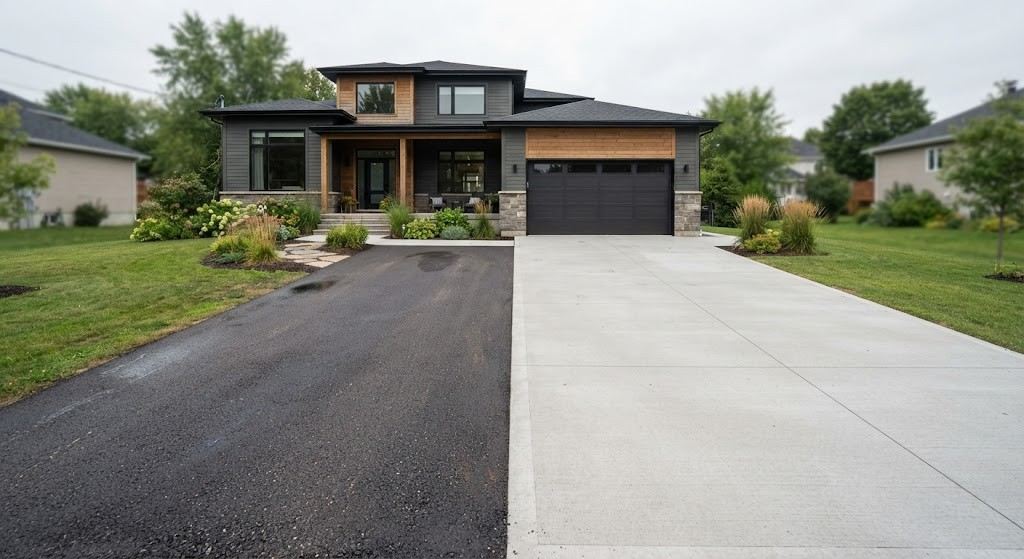
Quick answer: For most Halifax and Nova Scotia homes, an asphalt driveway is the better value. It typically costs 30–50% less than concrete up front, flexes through freeze-thaw cycles and is easy to repair. A concrete driveway lasts longer and needs less routine maintenance, but costs more up front and can scale from road salt. Either one only lasts if it sits on a properly built base.
Choosing between asphalt and concrete is one of the biggest decisions in any driveway project. Both materials work in Nova Scotia, but they behave very differently in our wet winters, salted streets and constant freeze-thaw cycles. This asphalt vs concrete driveway guide compares cost, lifespan, winter performance and maintenance so you can choose with confidence.
Asphalt vs Concrete Driveway at a Glance
| Factor | Asphalt driveway | Concrete driveway |
|---|---|---|
| Typical installed cost (Canada, 2026) | About $4–$12 per sq. ft. | About $8–$18 per sq. ft. |
| Expected lifespan | 15–25 years with maintenance | 25–40 years with maintenance |
| Freeze-thaw performance | Flexible; handles ground movement well | Rigid; can crack if the base moves |
| Road salt resistance | Not chemically damaged by salt | Can scale or flake without air entrainment and sealing |
| Routine maintenance | Sealcoat every 2–4 years; fill cracks | Seal periodically; repair joints |
| Repairs | Easy to patch; patches blend well | Harder to patch; repairs often visible |
| Ready to drive on | About 24–72 hours | About 7 days |
| Appearance | Dark, uniform finish | Lighter; broom, exposed aggregate or stamped options |
What Is the Difference Between Asphalt and Concrete?
Asphalt, also called blacktop, is a mix of crushed stone and sand bound together with bitumen, a petroleum-based binder. Contractors place it hot as hot mix asphalt and compact it with rollers. Because the binder stays slightly flexible, asphalt is known as a flexible pavement.
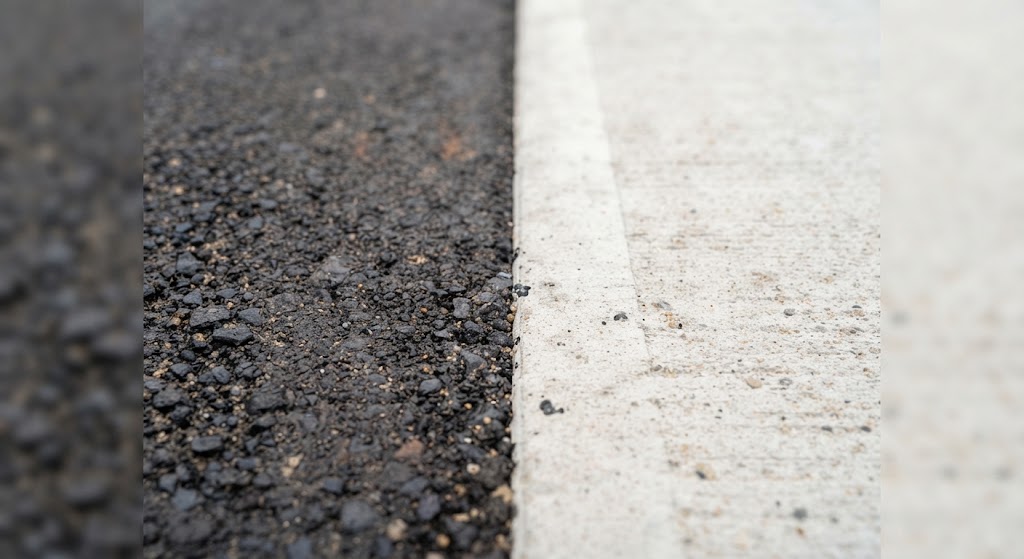
Concrete is a mix of Portland cement, water, sand and crushed stone. It hardens through a chemical process called curing and forms a rigid slab. Concrete driveways are usually reinforced with wire mesh or rebar and divided by control joints so cracks form in planned lines.
How Much Does Each Driveway Cost?
Asphalt wins on upfront cost. Recent Canadian pricing guides put installed asphalt driveways at roughly $4 to $12 per square foot, while plain concrete driveways typically run $8 to $18 per square foot, with Atlantic Canada averaging about $7.50 to $16 for concrete. Decorative finishes such as exposed aggregate or stamped concrete add more.
For a typical 600-square-foot double driveway, that difference often means several thousand dollars. Your actual price depends on:
- Driveway size, slope and access for equipment
- Removal of an old driveway, if any
- Excavation depth and the condition of the soil below
- Base thickness and drainage work
- Finish type and thickness of the surface
Over the full life of the driveway, the gap narrows. Asphalt needs sealcoating and crack filling every few years, while concrete needs less routine care but costs more to repair when problems appear. For pricing based on your actual property, see our asphalt paving in Halifax and concrete services.
Which Driveway Handles Nova Scotia Winters Better?
Nova Scotia winters are hard on pavement. Temperatures cross the freezing point again and again, so water in the ground freezes, expands and thaws. That freeze-thaw cycle causes frost heave, which lifts and shifts anything sitting on top.
Asphalt handles this movement well. Its flexibility lets it bend slightly instead of snapping, and small cracks are simple to seal before water gets in. Its dark surface also absorbs sunlight, which helps snow and ice melt faster.
Concrete is stronger but less forgiving. If the ground underneath moves, a rigid slab can crack. Concrete is also vulnerable to de-icing salt, which can cause surface scaling, where thin layers flake away. Air-entrained concrete, which contains tiny air bubbles that relieve freezing pressure, and a good sealer reduce that risk significantly.
How Long Does Each Driveway Last?
A well-built asphalt driveway typically lasts 15 to 25 years. Regular sealcoating, prompt crack filling and good drainage push it toward the top of that range. Once the surface wears but the base stays solid, an asphalt overlay can add many more years at lower cost than full replacement.
A properly installed concrete driveway can last 25 to 40 years. Its lifespan depends heavily on the mix design, reinforcement, curing and how much road salt reaches the surface each winter.
Maintenance and Repairs Compared
Asphalt asks for more frequent but inexpensive care. Plan to sealcoat every two to four years, fill cracks each spring, and keep water draining off the edges. When damage happens, a contractor can cut out the failed section and patch it with fresh asphalt that blends in well.
Concrete needs less routine attention. Sealing every few years helps resist salt and staining, and joints may need resealing. Repairs are harder, though. Cracked or heaved slabs usually need sections removed and replaced, and new concrete rarely matches the old colour exactly.
Installation Time and When You Can Use It
An asphalt driveway is usually paved in a day once the base is ready. Most homeowners can drive on it after about 24 to 72 hours, depending on temperature, though it keeps hardening for several weeks.
Concrete takes longer. After forming and pouring, it typically needs about seven days before cars can use it and roughly 28 days to reach full design strength. Cold weather slows curing, which matters for late-season pours in Nova Scotia. For the full timeline, read our guide on how long concrete takes to cure.
Which Should You Choose?
Choose asphalt if you want the lowest upfront cost, have a long or rural driveway, expect heavy plowing and salt, or want fast installation and easy repairs.
Choose concrete if you want the longest lifespan, prefer a lighter decorative finish, have a shorter driveway, and are prepared to protect it from salt with proper sealing.
Why the Base Matters More Than the Surface
Most driveway failures, whether asphalt or concrete, start below the surface. A thin base, soft subgrade or poor drainage will crack any material, especially after a few Nova Scotia winters. A quality driveway starts with excavation to stable ground, a compacted base of crushed gravel, and grading that moves water away from the surface and your home.
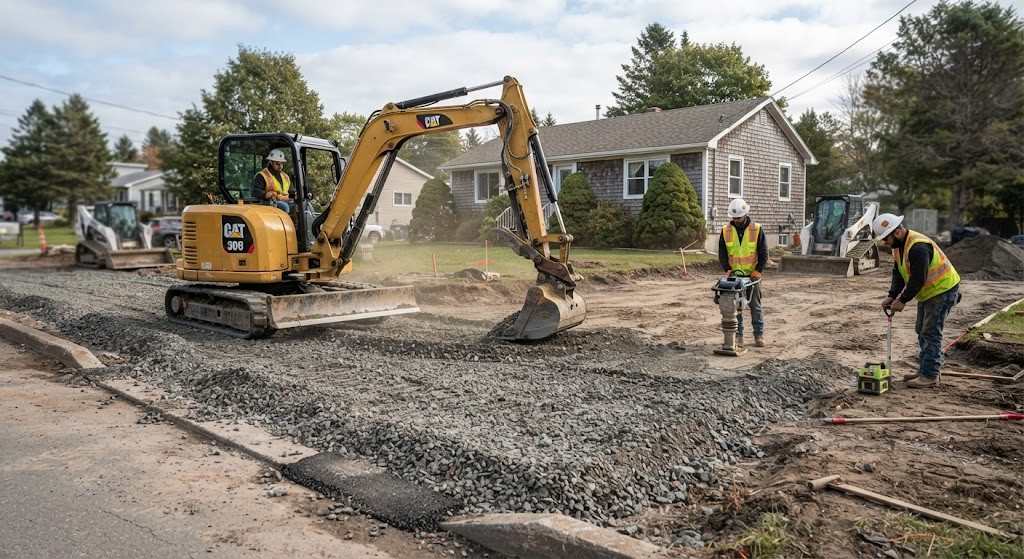
That’s the approach G&R Kelly takes on every driveway. As a heavy civil contractor in Halifax that also handles excavation and drainage, our team builds the base before the surface goes down. On the street cuts and driveway repairs our crews handle across HRM, the surface is rarely the root problem; a thin base or trapped water usually is.
Frequently Asked Questions
Is asphalt cheaper than concrete for a driveway?
Yes. Installed asphalt typically costs 30–50% less than plain concrete per square foot in Canada, although asphalt needs more frequent maintenance over its life.
Is concrete or asphalt better in cold climates?
Asphalt generally performs better in cold, wet climates like Nova Scotia because it flexes with freeze-thaw movement and resists salt damage. Concrete can perform well too if it is air-entrained, well reinforced and sealed.
Does road salt damage concrete driveways?
It can. De-icing salt increases freeze-thaw stress and can cause surface scaling. Air-entrained concrete, proper curing and regular sealing reduce the damage.
Can you pave asphalt over a concrete driveway?
Yes, if the concrete is stable and level. However, cracks and joints in the concrete can reflect up through the new asphalt over time, so a contractor should assess the slab first.
Get Expert Advice on Your Driveway
Not sure which material is right for your property? G&R Kelly serves homeowners in Halifax, Dartmouth, Bedford, Sackville and across Nova Scotia. Request a free driveway estimate, and we’ll assess your site, explain your options and give you a detailed written quote.